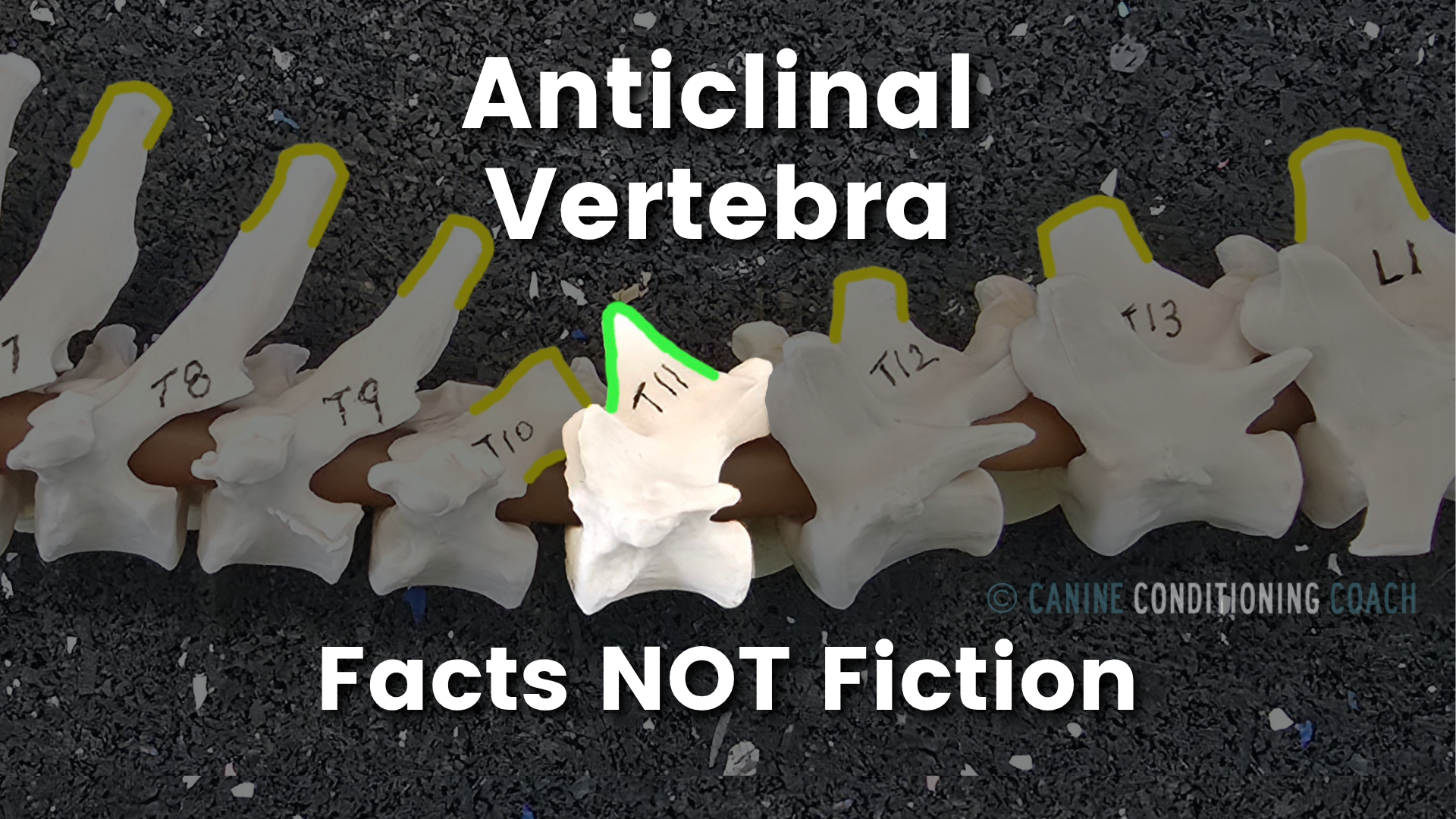

There is a lot of mythology around the anticlinal vertebra, and it is often cited (erroneously) as an acceptable reason why the spine might be lordotic (concave), or the reason for a “knick” in the backline. And this is simply not the case. In reality, a healthy, well-conditioned dog should have multiple layers of musculature covering this hinge point; visible dips are often indicators of muscle imbalance through the thoracic sling / Swayback Posture or lumbosacral disease.
What is the Anticlinal Vertebra in Dogs
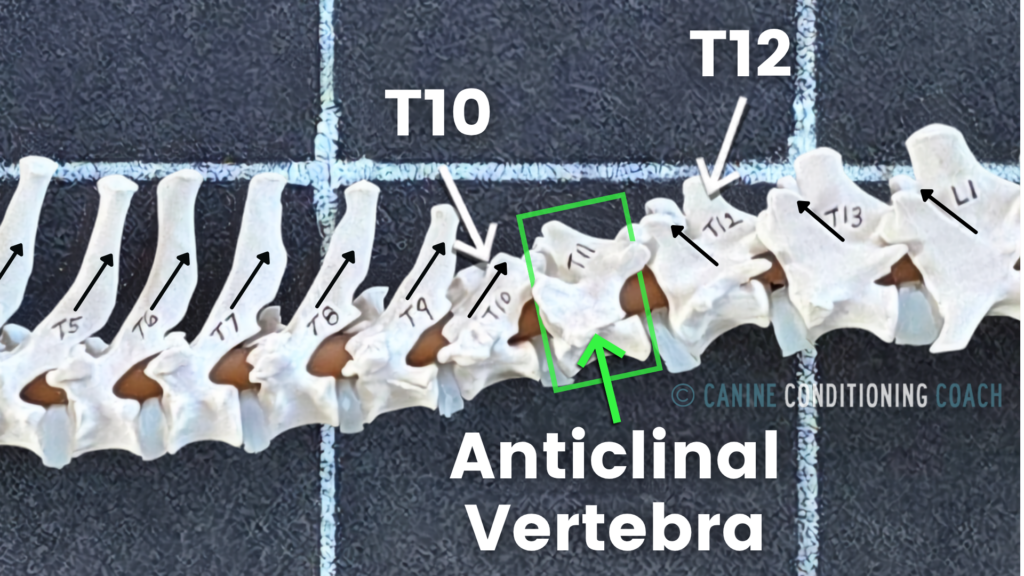
The anticlinal vertebra is named for the orientation of its spinous process, which stands vertically aligned over the vertebral body. In the preceding thoracic vertebrae (T1 to T10), the spinous processes are inclined at a caudal angle, slanting diagonally toward the tail. Conversely, in the following thoracic and lumbar vertebrae (T12 through L7), the spinous processes are declined at a cranial angle, slanting diagonally toward the head. Unlike these, the anticlinal vertebra is neither inclined nor declined (“anti-clined”); it is truly vertical.
———
Function of the Anticlinal Vertebra
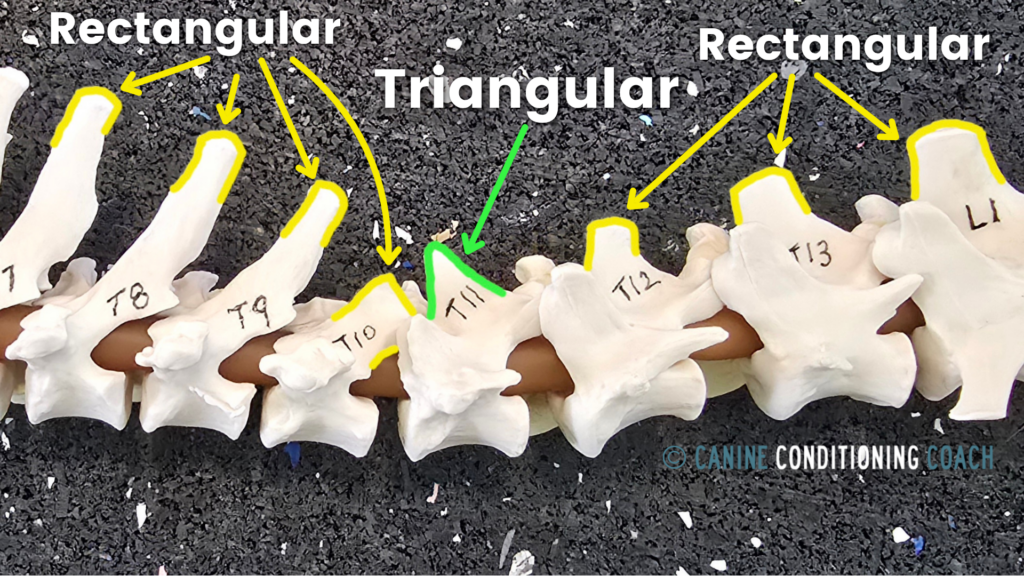
The anticlinal vertebrae typically occurs at T10 or T11, and includes a truncated spinous process that departs from the typical rectangular shape to a much more triangular shape.

This adaptation allows T10, T11, and T12 to articulate without the spinous processes running into each other, improving the functional mobility of the canine spine.
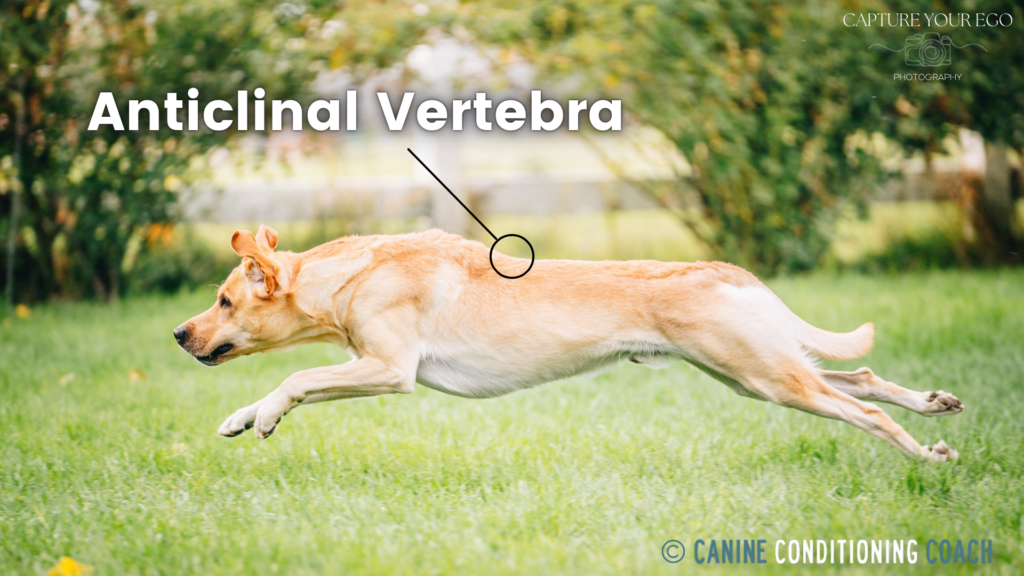
This anatomical adaptation in canines allows for additional spine extension at T9, T10, T11, T12 and is needed for galloping at top speeds during the double suspension gallop. For this reason the anticlinal vertebrae is often referred to as the “coupling vertebrae” as it acts as the link between the natural lordosis (concavity) and kyphosis (convexity) of the canine spinal curvature, and allows for the fluid exchange of kinetic energy between the forelimbs and rear limbs during high speed locomotion.
———
Canine vs Equine: Comparative Anatomy
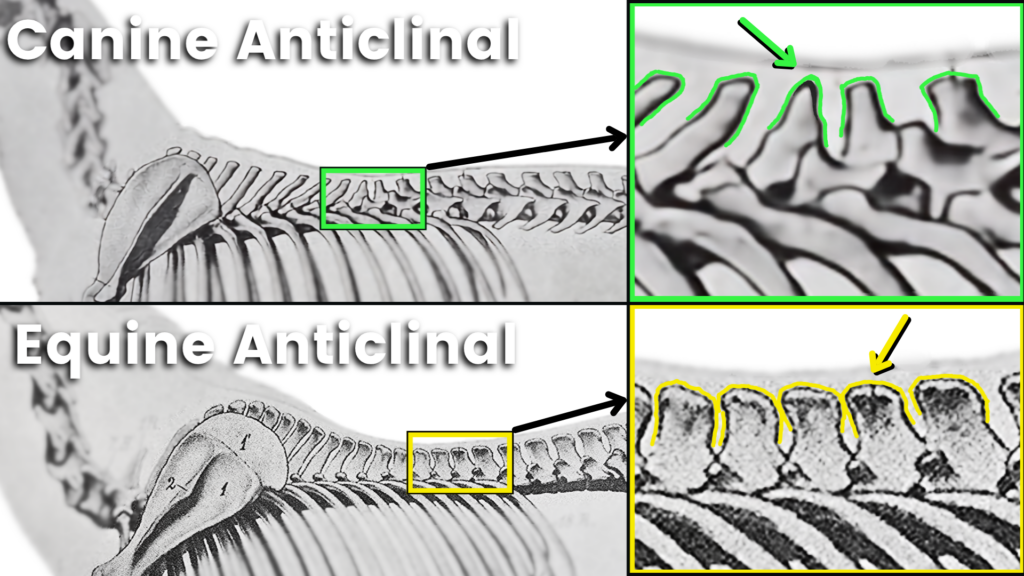
This additional flexibility adaptation allowed for by the anticlinal vertebra also means this level is inherently unstable. This highlights a major difference in comparative anatomy between the canine and equine spine, and is the underlying rational for never loading the canine spine the way we might a horse. Placing any load along the thoracic spine can cause shearing forces at the level of the anticlinal vertebra, and should be avoided.
———
Is a Dip in My Dog’s Backline Normal?
The anticlinal vertebrae is sometimes erroneously stated as the cause for an unlevel spine, specifically an abrupt dip behind the withers, or “knick”. This is often backed up by the claim that the height of the spinous process changes in the area of T10-11… So any dip in the backline is structural and correct. But this claim fails to take into consideration the musculoskeletal system as a whole. The anticlinal vertebrae is covered by many layers of muscle, it should not be superficially visible in properly conditioned dogs. So except in cases of muscle wasting due to malnutrition, or neuropathic muscle atrophy, the anticlinal vertebrae has nothing to do with spine misalignment, or a “knick” in the backline. This is true across breeds.
Anticlinal Vertebra is Covered by Muscle
Here you can see all the spinous processes, including the anticlinal vertebra is covered by muscle including the intermediate layer of the longissimus system, as well as the superficial layer of the iliocostalis system. The anticlinal vertebra itself simply is not superficially visible in a well muscled, healthy dog.
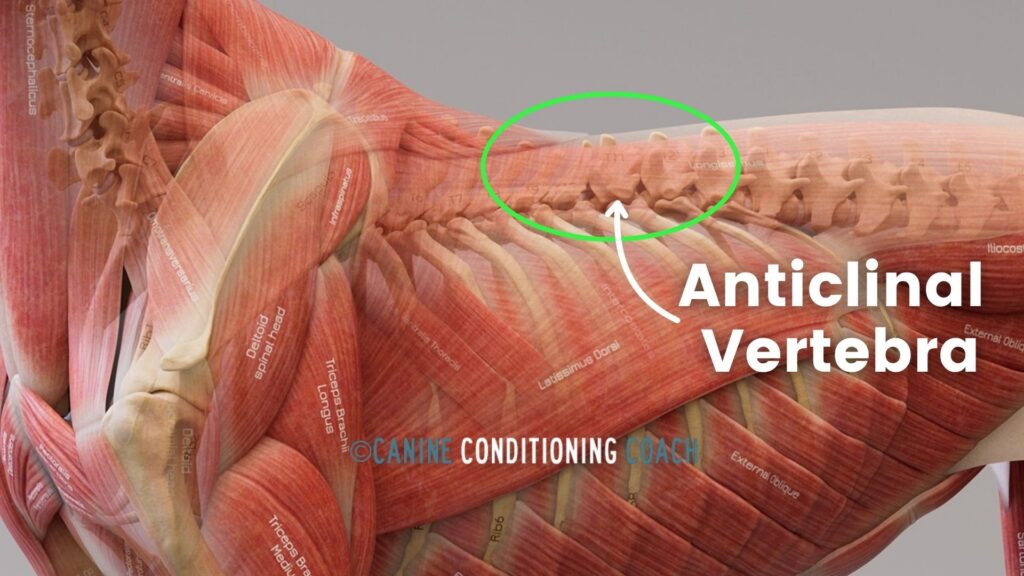
Much more likely, dogs demonstrating a “knick”, or abrupt dip in spine alignment are either dealing with a muscle imbalance in the thoracic sling, or are dealing with a compensatory posture in the lumbar spine, called lumbar hyperkyphosis.
———
Thoracic Sling
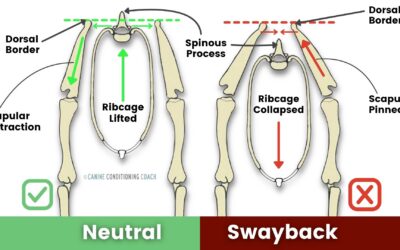
When the muscles of the thoracic sling are not properly balanced, the ribcage collapses downward, and is no longer properly supported by the serratus ventralis. This causes the thoracic spine to shear downward, the scapulae to wing upward, and the dog to demonstrate Swayback postural deviation. Swayback Posture is a progressive deviation ranging from mild to severe, characterized by prominent dorsal scapular placement and a lordotic (concave) thoracic spine.
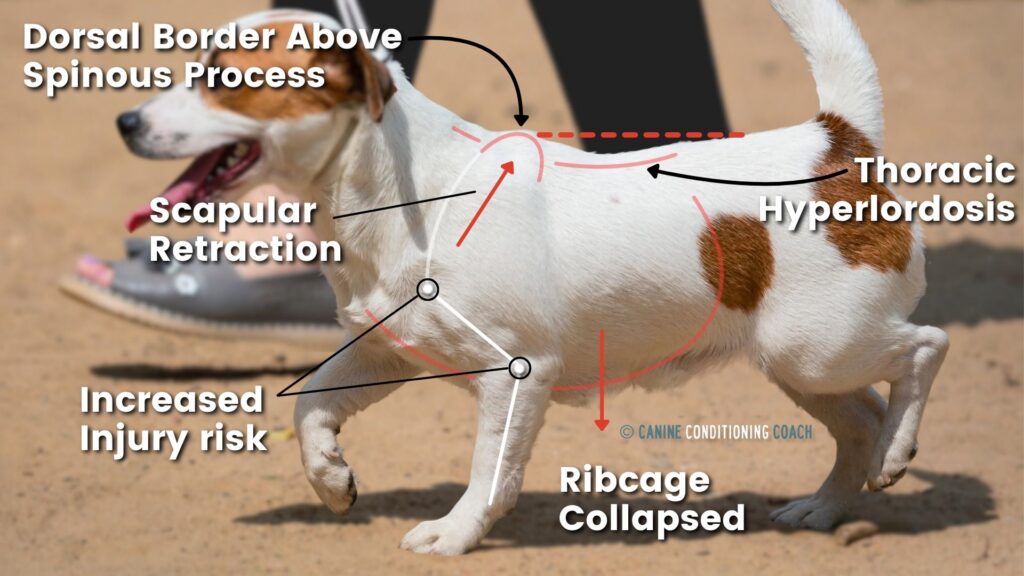
If you’d like to read more on this topic, check out my Swayback Posture: Understanding the Thoracic Sling blog post.
———
Thoracolumbar Hyperkyphosis
The other common postural deviation often misattributed to the anticlinal vertebra is thoracolumbar hyperkyphosis, or convexity of the TL spine. Sometimes called “Roach Back”, this deviation is characterized by abrupt, irregular spine flexion that begins in the thoracic spine and extends into the lumbar region. Often, prominent spinous processes appears at the cranial aspect of the hyperkyphosis, indicating a progression of the underlying disease process.
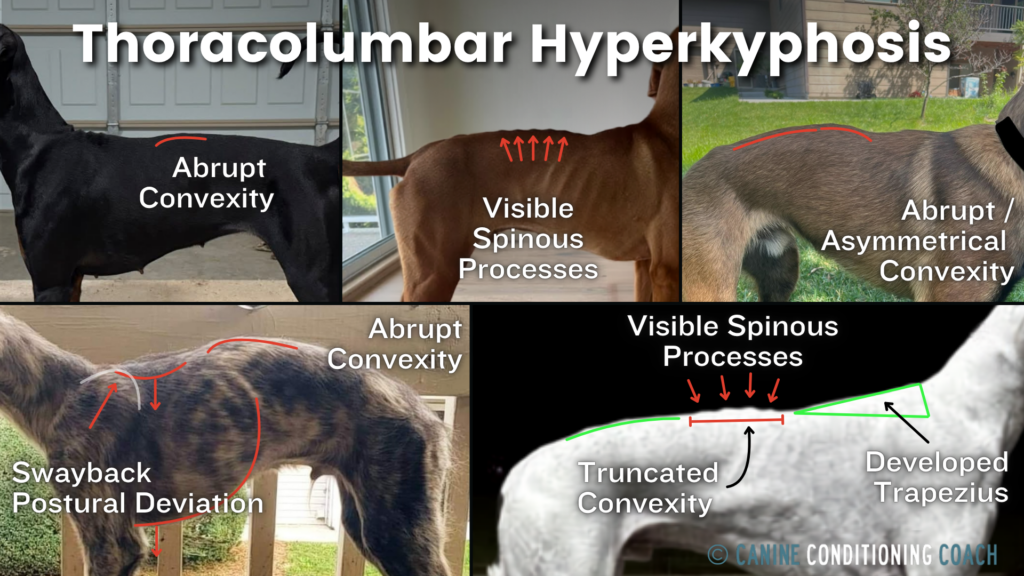
Thoracolumbar hyperkyphosis strongly correlates with Lumbosacral Disease (LS Disease), an umbrella term for various spinal pathologies that cause neuropathic pain, which are known to be wildly underreported. Many of these conditions are heritable. Dogs demonstrating thoracolumbar hyperkyphosis alongside postural, gait, or behavioral anomalies should be evaluated by a board-certified veterinary neurologist. This postural deviation may be a necessary compensatory adaptation the dog uses to avoid nerve pain, and should not be addressed with conditioning exercises until after diagnosis. End range hip extension, spine extension, and manual weight shifting are all contraindicated for LS Disease.
———
But my Breed Standard Says…
While this argument is common, an abrupt hyperkyphosis with an exposed spinous process, or a “knick” in the backline, should not be dismissed as a natural result of the anticlinal vertebra. Many spinal pathologies grouped under the umbrella of LS Disease, such as spinal or foraminal stenosis, transitional vertebrae (thoracic or lumbar), spondylosis deformans, ankylosing spondylitis, and tethered cord syndrome, have heritable genetic components. These issues may have been unintentionally bred into specific breeds or lines.
Do not let breed standards or breed-specific mythology convince you to ignore the evidence of your senses. Dogs do not adopt faulty mechanics or poor posture without cause. If your dog is demonstrating thoracolumbar hyperkyphosis, with behavioral, postural, and / or movement changes, a neuro consult is strongly indicated.
———
Optical Illusion: Developed Trapezius
When the thoracic component of the trapezius is very heavily developed in sport and working dogs, there can be a change in the apparent curvature of the spine.
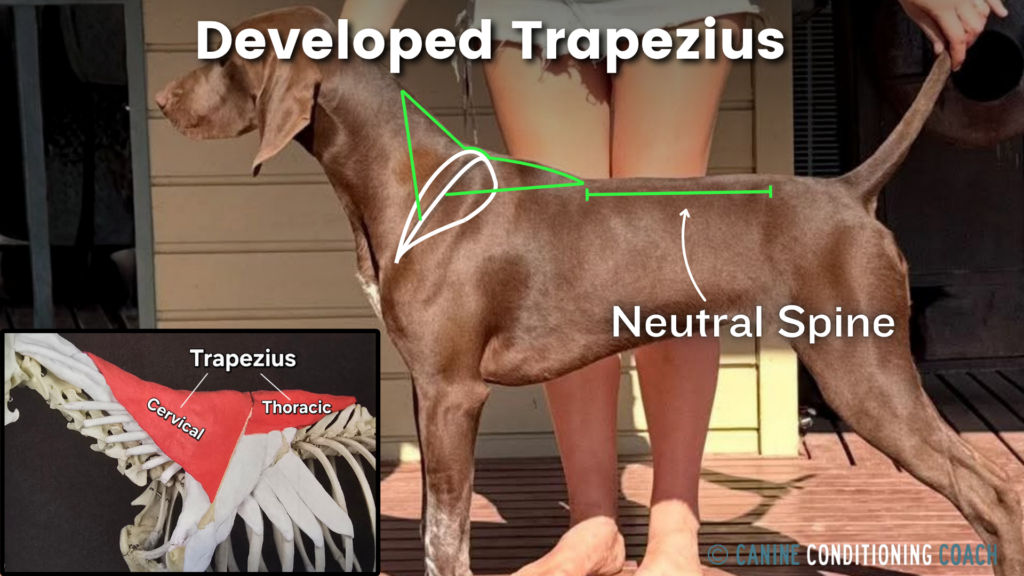
But this is an optical illusion, and is related to the muscular overlay of the trapezius on top of the latissimus and longissimus, And is not related to a change in the actual spinal curvature, or the anticlinal vertebrae in any way.
———
What About Sighthounds?
Even in sighthounds the anticlinal vertebra is not visible superficially.
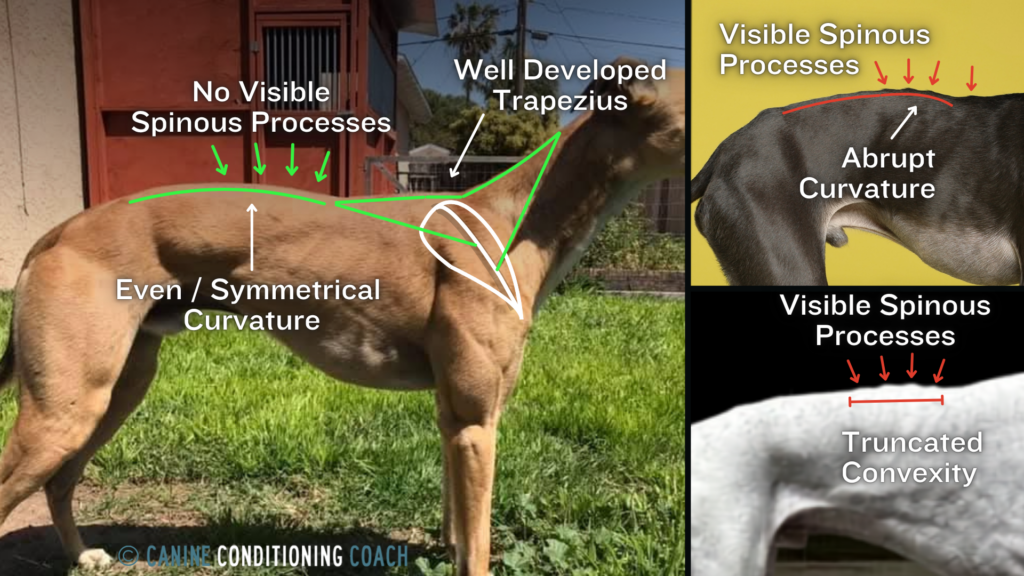
Properly muscled sighthounds, free from lumbosacral disease will demonstrate a smooth curvature through the thoracolumbar spine, with no visible spinous processes. This is true for properly conditioned show and sport bred sighthounds.
———
TLDR:
The anticlinal vertebra is a unique anatomical feature that facilitates spinal extension and fluid movement in dogs, specifically during high-speed locomotion. Despite common misconceptions, this vertebra is not responsible for visible spinal “knick” or thoracic lordosis; in a healthy, well-muscled dog, it is covered by muscle layers and remains superficially invisible.
Visible dips or abrupt changes in the spine are not normal variations of the anticlinal vertebra but are instead markers of structural issues, such as Swayback postural deviation, thoracic sling muscle imbalances, or thoracolumbar hyperkyphosis and the associated spinal pathologies. Rather than dismissing these deviations as benign, owners should recognize them as potential indicators of underlying health concerns.
The dog world loves to take technical sounding information and attribute mythology to it without fully understanding the underlying anatomy and physiology. And the anticlinal vertebrae is an unfortunate example of this.
0 Comments