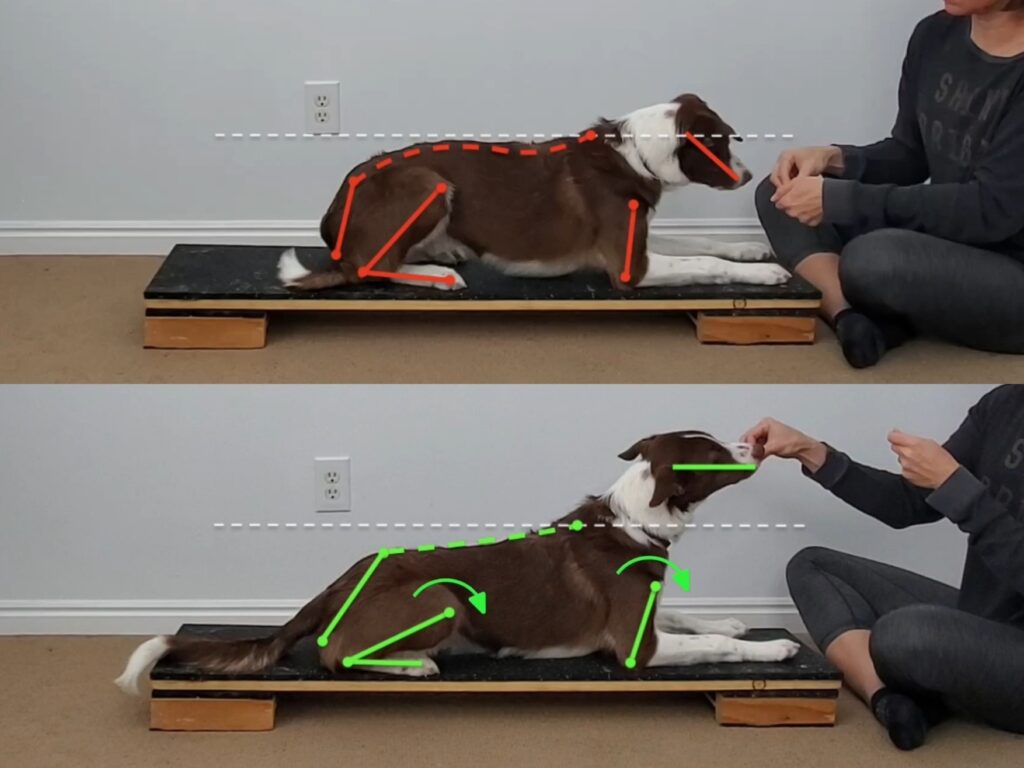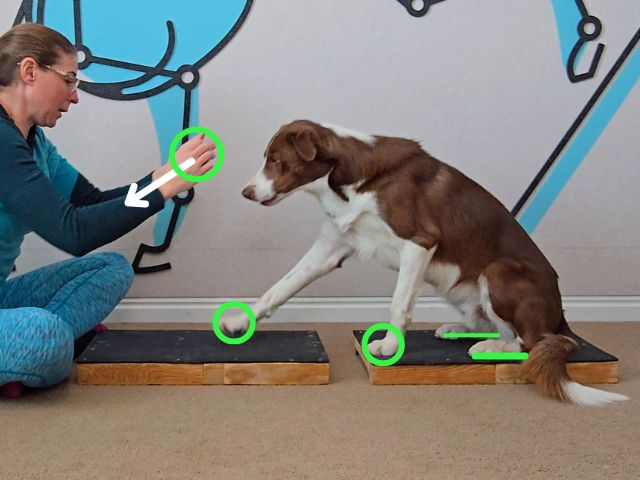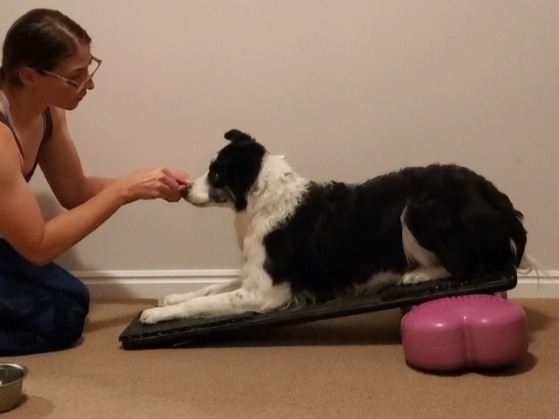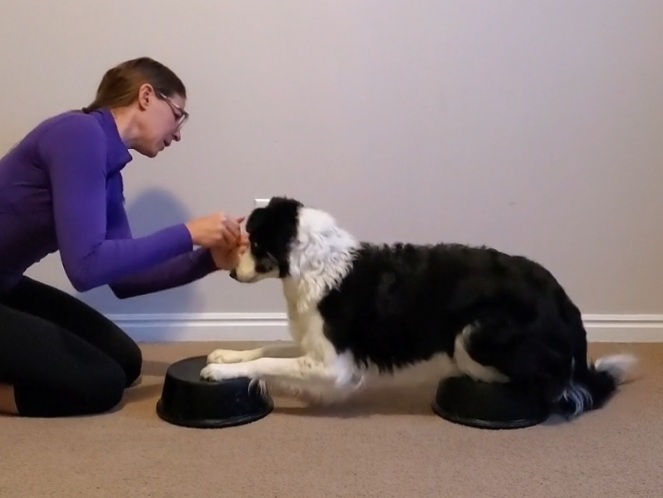
Purpose: Fold Back Down builds on the skills learned in the Posture Down and Sit – Walk Forward Down exercises, and is a functional strength and stability exercise affecting every joint in the canine body.
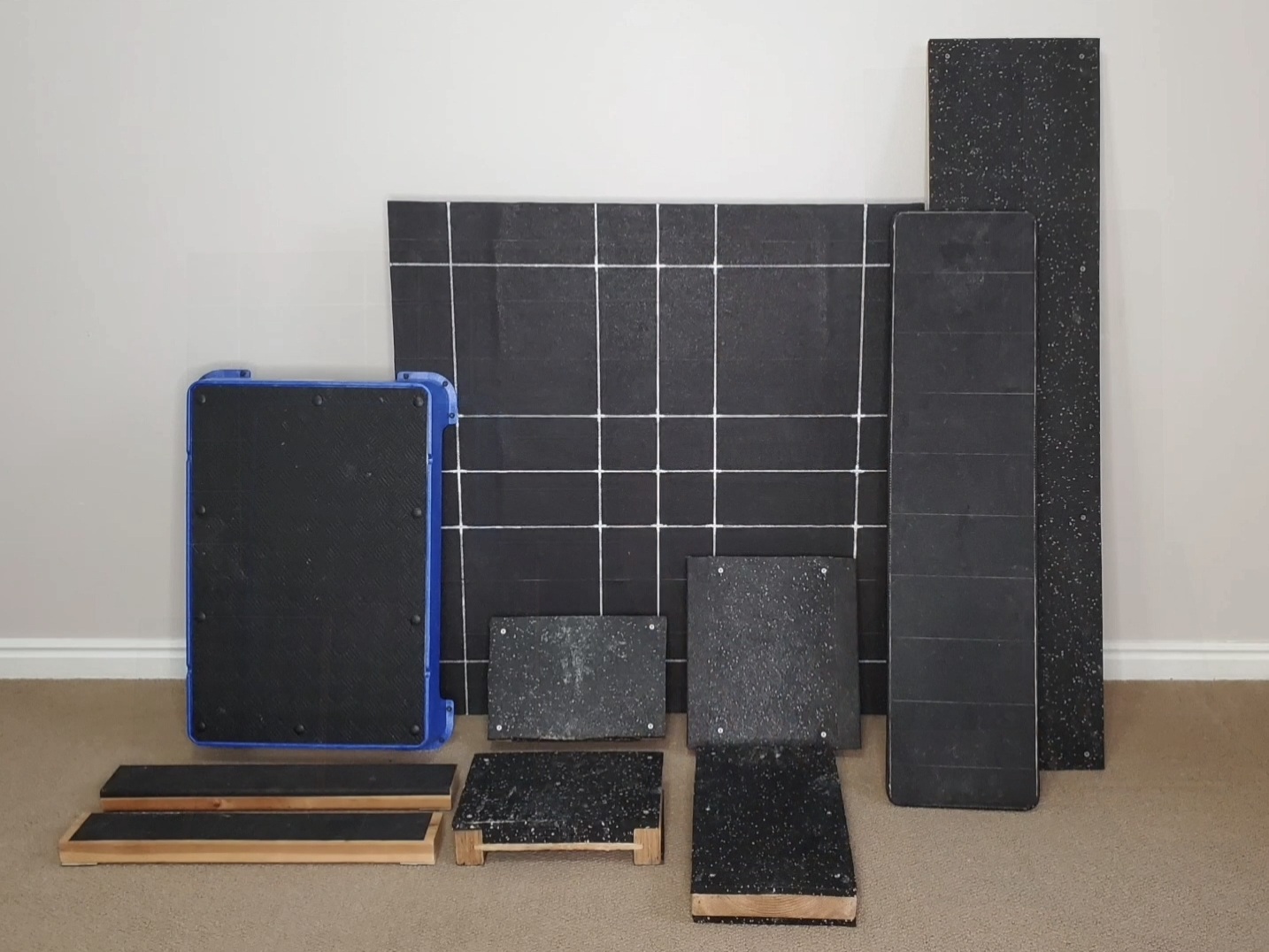
Equipment: 2 Sitting Platforms or 1 Standing Platform
Targets: Back muscles (epaxials), hypaxials (including the iliopsoas), abdominal muscles, shoulder stabilizers, and hip stabilizers. Also builds strength and functional mobility through the triceps, quadriceps, and proximal hamstring.
TRAINING STEPS
- Start in Posture Down, rewarding using Posture Down principles. This provides context to the dog, and ensures the two of you are “on the same page”.
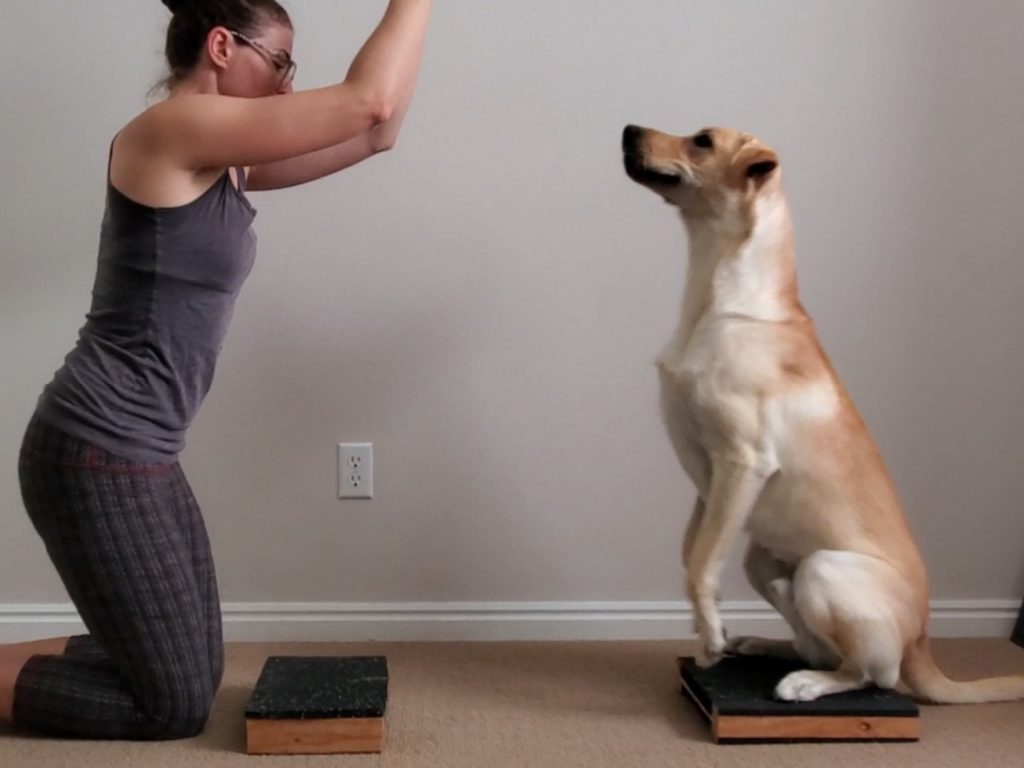
- Using the same strategy that was introduced in the Posture Down exercise, cue the transition to Stand (concentric phase), and reward.
- Keeping Placement of Reward high, use Handler Motion toward the dog to cue the transition to Down (eccentric phase).
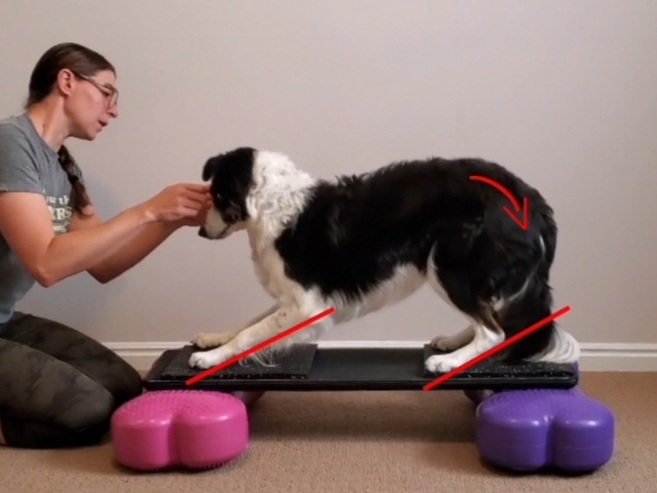
- The antebrachium and hock should remain “in phase”, tracking parallel to each other during the transition to Down, and all four feet should remain still.
- Elbows and the point of the hock should touch down at the same time.
- Reward using Posture Down principles.
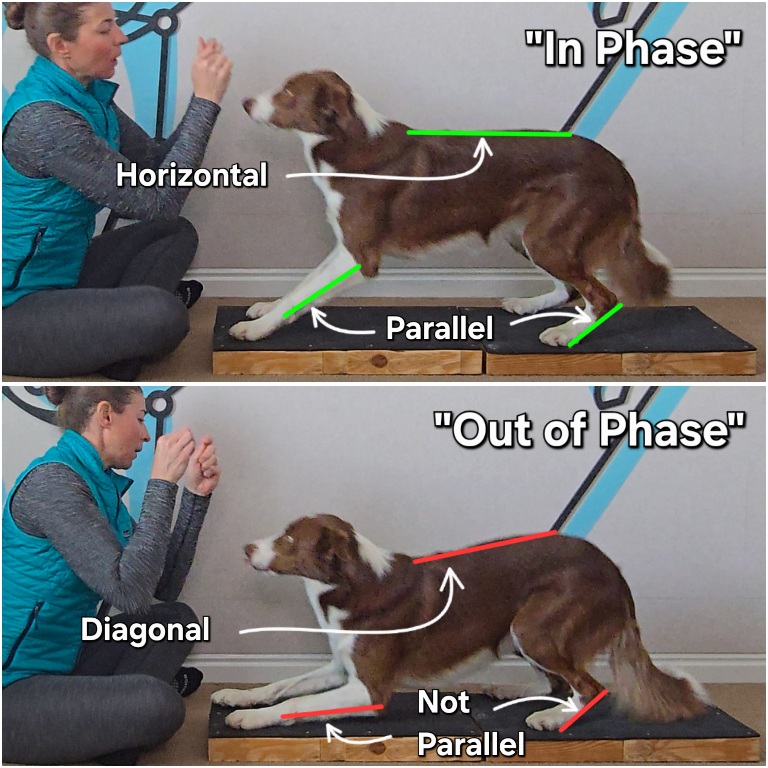
Goal: The goal of this exercise is to introduce and teach the eccentric transition from Stand to Down. This is a physically and mentally difficult task, which is why we spent so much time preparing with the Posture Down, and Sit – Walk Forward Down. The main focus initially is all four feet staying still, and the limbs moving “in phase”.
Watchpoints:
- Keeping Placement of Reward high throughout is the key to the limbs staying in phase, and the spine remaining horizontal. I NEVER move Placement of Reward toward the dog’s feet.
- Handler Motion is toward the dog not downward, following a horizontal line of motion.
- Elbows and point of the hock should touch down simultaneously, or close to simultaneously keeping the limbs “in phase”. If the elbows are touching down early, this means the dog is not yet strong enough to correctly weight shift into the rear, and more time is needed building strength in the concentric phase (covered in the Posture Down).
- If you’re using a verbal, make sure the cue is specific to this behavior. It’s not good dog training to use the same cue for multiple different behaviors.
- This exercise should come together relatively easily. If that’s not happening, if you or your dog are getting frustrated, or if your pup is unsure what they should be doing, revisiting the prerequisites is indicated.
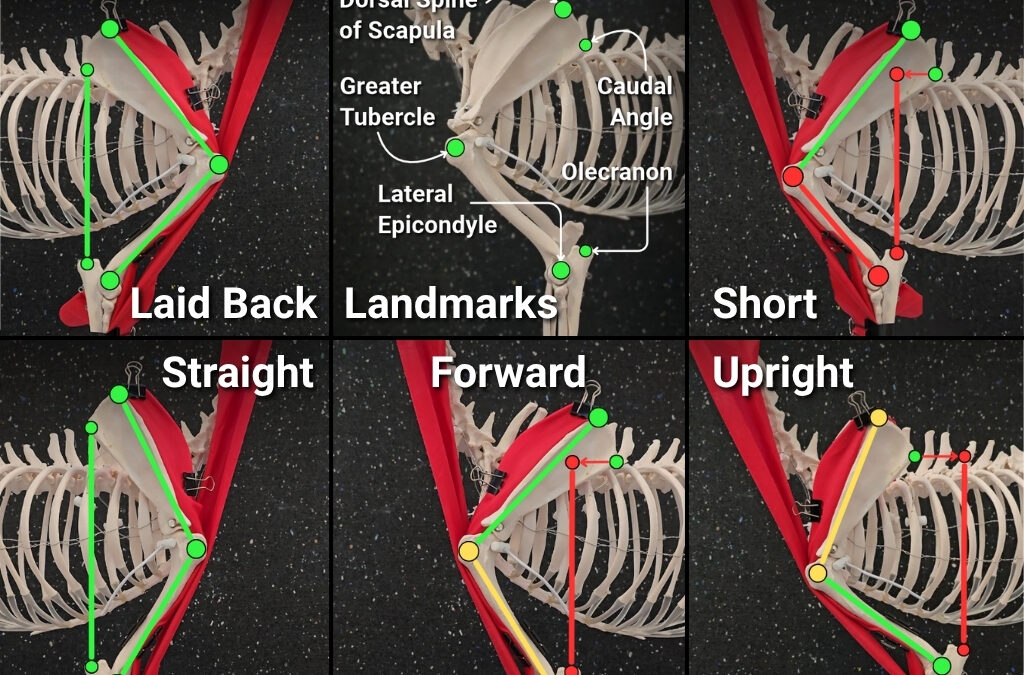
NOTE: if you are dealing with a growing dog, there will be times during growth spurts where a properly executed Fold Back Down is mechanically impossible. If the length of the femur (upper thigh bone) or humerus (upper arm bone) is proportionally too long, the dog will have to move their feet. If you have worked through the prerequisite exercises as they are laid out in your Program Manual, this should not be an issue.